
Search Cache County Marriage Records
Cache County marriage records are handled through the Logan clerk office, but the county gives you more than one way to work. You can start with the county clerk, use the online marriage page, or lean on historical sources when you need older material. That mix matters in Cache County because the office keeps current licenses, marriage ceremonies, and public record help tied together in one local system. It is a good county for direct service, but it is also a strong county for history.
Cache County Quick Facts
Cache County Marriage Records Office
The Cache County Clerk's Office is located at 179 North Main Street, Suite 102, Logan, Utah 84321-5081. The main phone number is 435-716-7150, and the clerk named in the research is Bryson J. Behm. The county site at cachecounty.org/clerk is the general office entry point, while the marriage license page at cachecounty.gov/clerk/marriage-license is the most direct marriage-record page.
The county office works on a clear schedule. Marriage licenses are issued from 8:00 a.m. to 4:30 p.m., and wedding ceremonies are performed from 9:00 a.m. to 4:00 p.m. by appointment. The marriage research also notes that all fees must be paid before services are rendered and that a credit or debit card adds a $1.50 transaction fee. Those details matter because Cache County is very specific about how the front desk runs.
The county homepage is the source behind the image below and gives the broad county contact path for marriage records, elections, and other clerk services.
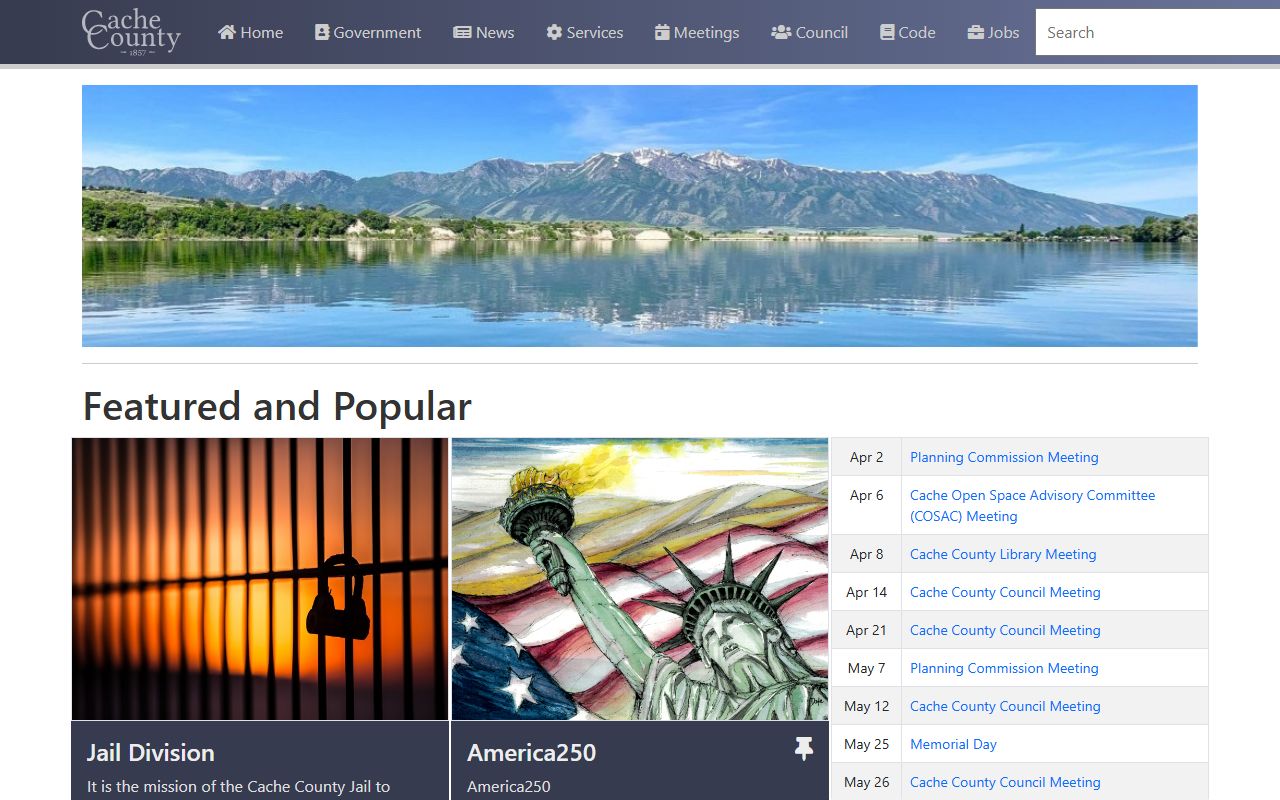
That page is a useful starting point when you want the clerk office first and the marriage page second.
Search Cache County Marriage Records
Cache County has a strong search path for both current and historical records. The clerk office wants both parties to appear in person for a new license, but the county also offers an online application through its CivicReview marriage application. That online step is useful when you want to shorten the office visit. The county says a license has no waiting period and is valid for 30 days anywhere in Utah, while the detailed page uses 32 days in the application flow. The safest move is to check the current clerk instructions before you schedule a ceremony.
For a better Cache County marriage records search, keep the main facts ready before you start. The county requires valid identification, and the local process asks for standard identity and family details when you apply. The county also expects both parties to appear in person, unless the special notary path applies for someone who cannot get to the office. If you need an old record, the county office can still help, but the historical route often works better through archive and genealogy tools.
Use these details when you search or apply:
- Both spouses' full legal names
- Valid identification for each person
- County and date of the marriage if known
- Parent names and birth details for the application
When the county office is not enough on its own, the better next step is a historical search through the Utah State Archives or the FamilySearch Utah vital records guide. Those sources are stronger than an unverified third-party search tool and fit the county's research trail more cleanly.
Cache County Marriage Records and Ceremonies
Cache County treats marriage licensing and marriage ceremonies as two linked services. The license fee is $50, the ceremony fee is $40, and a designee fee of $10 applies when a couple wants a non-standard officiant set up through the clerk. A document certification costs $5, and general copies are listed at $0.25. These fees show how much of the county process is still run from the clerk's office rather than through a detached state system.
The county also gives room for special cases. If a couple knows someone who is not already authorized to officiate, the county can handle a limited designee process. If a couple cannot visit in person, the research notes a notary-based path with separate application and notary certificate forms. That is one reason Cache County stands out. It offers a plain office route for regular applicants and a more flexible route when the situation is harder.
Cache County ceremony work is scheduled and confirmed in advance. Ceremonies are about 30 minutes long, are not scheduled on election days, and require witnesses over age 18. The county will help if the couple cannot supply witnesses, which keeps the local process practical rather than rigid. If you are planning a wedding in Logan, that flexibility makes the clerk office part of the ceremony plan, not just the paperwork plan.
The marriage license page is the source behind the image below and gives the clearest local view of the county's license, ceremony, and application rules.
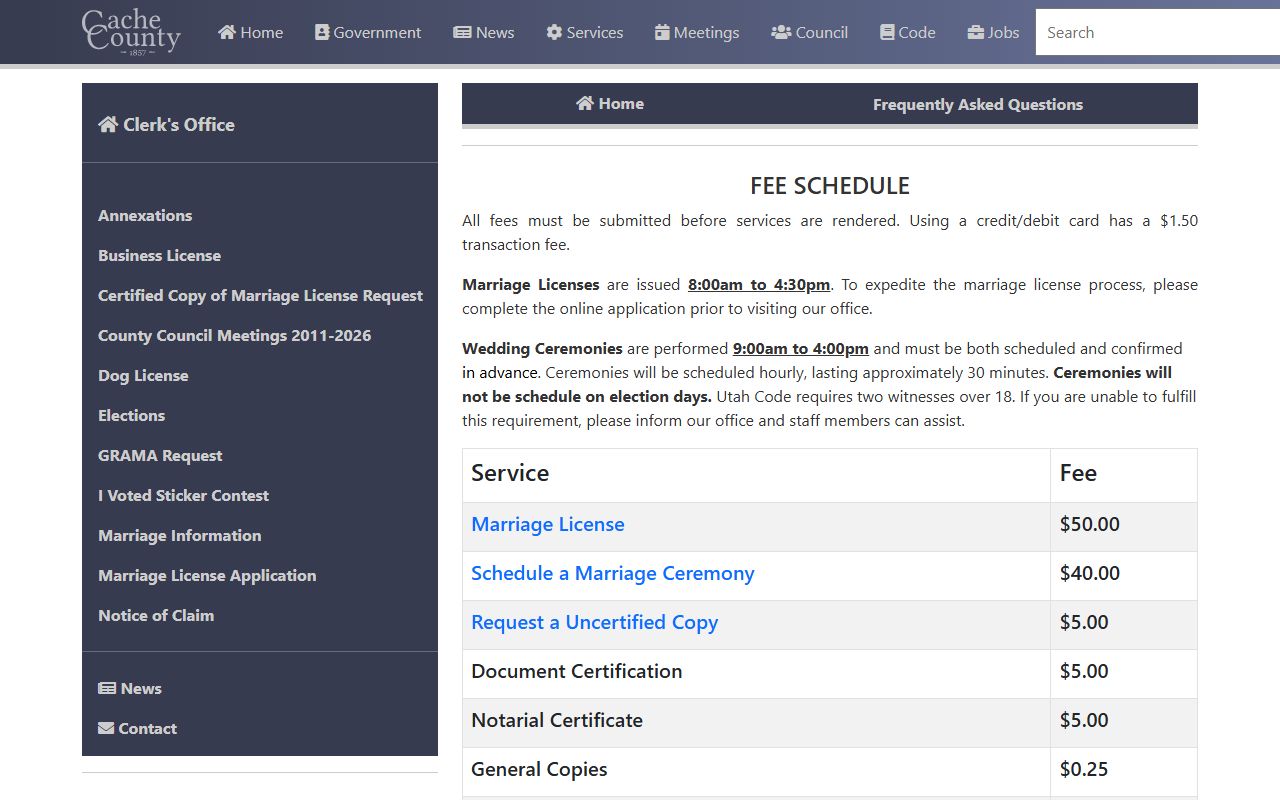
That page ties the license, ceremony, and application rules together so the search does not split into too many separate steps.
Cache County Marriage Records History
Cache County has a strong record history and a strong family-history audience. The research says marriage records from 1887 through 1966 are available through FamilySearch Library microfilm, with film numbers 430301-36. It also notes that marriages up to 1914 are indexed in the Early Church Information File. That gives Cache County researchers a real path for older marriages, not just a note that the records exist somewhere.
Logan and Cache County also have a local marriage culture that makes the records useful beyond legal proof. Popular ceremony locations include Logan City Park pavilion, Green Canyon's natural amphitheater, various LDS ward buildings, and Utah State University campus locations. That local context matters when you are trying to match a record to a place or a family story. It can also help narrow a search when a marriage record is mentioned in family notes but not in a formal certificate.
The Bear River Health Department works in coordination with the county office, which is another clue that Cache County marriage records are part of a broader local record network. The county archive and the family history path matter too. Once a marriage is old enough to become public, the county, state, and genealogy tools start to overlap more than they do for a new license.
Note: Cache County marriage records before the modern clerk era may show up in church, archive, or indexed family-history sources even if the direct office path is not the easiest one.
Cache County Marriage Records Fees
The Cache County fee schedule is detailed, and the office expects payment before service. The marriage license costs $50. A ceremony costs $40. A designee fee is $10. Document certification is $5, notarial certificates are $5, and general copies are $0.25. If you pay by credit or debit card, the county adds a $1.50 transaction fee. Those numbers matter because Cache County is one of the more explicit Utah counties about its service costs.
The county also says that if a license is lost, a new one must be purchased. That is a practical issue worth knowing before a ceremony is set. The application information makes it clear that the county wants people to finish the process carefully, not casually. The license hours are 8:00 a.m. to 4:30 p.m., and ceremonies are 9:00 a.m. to 4:00 p.m. by appointment, so the fee step and the time step are connected.
The research also notes that Cache County licenses include two certified copies. That helps when one copy is needed for an agency and another is needed for a name change or a personal file. If the marriage record will later be used outside Utah, Utah apostille and authentication services are the next stop after you get the certified copy.
The online application page at app.civicreview.com is the source behind the image below and is the best local example of how Cache County combines fee payment and application prep.

That online application page makes the county's process easier to start before you ever get to the clerk window.
Cache County Marriage Records Access
Utah marriage records are public after 75 years, and Cache County fits that statewide access rule. For current records, the county clerk is still the direct source. For statewide certificate years from 1978 through 2010, the Utah Office of Vital Records and Statistics can fill the gap. For older historical work, the Utah State Archives and FamilySearch are the right tools to keep close at hand. Cache County sits in the middle of all three layers, which makes it a good county for both legal proof and family research.
The county also offers a practical online entry point through cachecounty.org and the clerk page at cachecounty.org/clerk. Those pages help you reach marriage services, records, and county office contacts without a lot of extra navigation. If you need a record for an agency request, a historical search, or a wedding plan, that direct county path is usually the fastest place to begin.
For a broader Utah search, these sources are still worth using: Utah State Archives, FamilySearch Utah vital records, and the Library of Congress Utah guide. They help sort the county record from the state certificate and the older church or probate source when the first search does not answer the question.
Helpful Utah Marriage Records
Cache County marriage records fit into the larger Utah system, so the county page works best when it stays connected to the state tools. The state vital records portal at vitalrecords.utah.gov helps with the 1978 to 2010 certificate window, while the Utah State Archives at archives.utah.gov helps with older public records and historical context. When a record predates the current county process, those sources can save time and give a cleaner answer.
If a Cache County marriage record needs use outside Utah, the state authentication office at authentications.utah.gov is the next stop after the certified copy is in hand. That keeps the record usable without changing the underlying marriage record. FamilySearch and the Library of Congress remain helpful for sorting older records and church-era material when the county file is not enough.
In short, Cache County marriage records are easiest when you treat them as a layered search. Start with the clerk, check the online tools, and then move into the archive and state sources if the date or the request type points you there. That approach matches the county's own record style and avoids wasted steps.
The marriage license page is the best local bookmark when you need current rules before a visit or a request.